
Local SEO for Law Firms: A Checklist for Showing Up in Search
When someone needs legal help, they often go straight to Google, Bing, or another search engine. If your law firm isn’t showing up in these local searches, you’re practically invisible to the people who need your expertise.
This is why local SEO (search engine optimization) is essential for finding clients in your area. The good news? You don’t need to be an expert to get started.
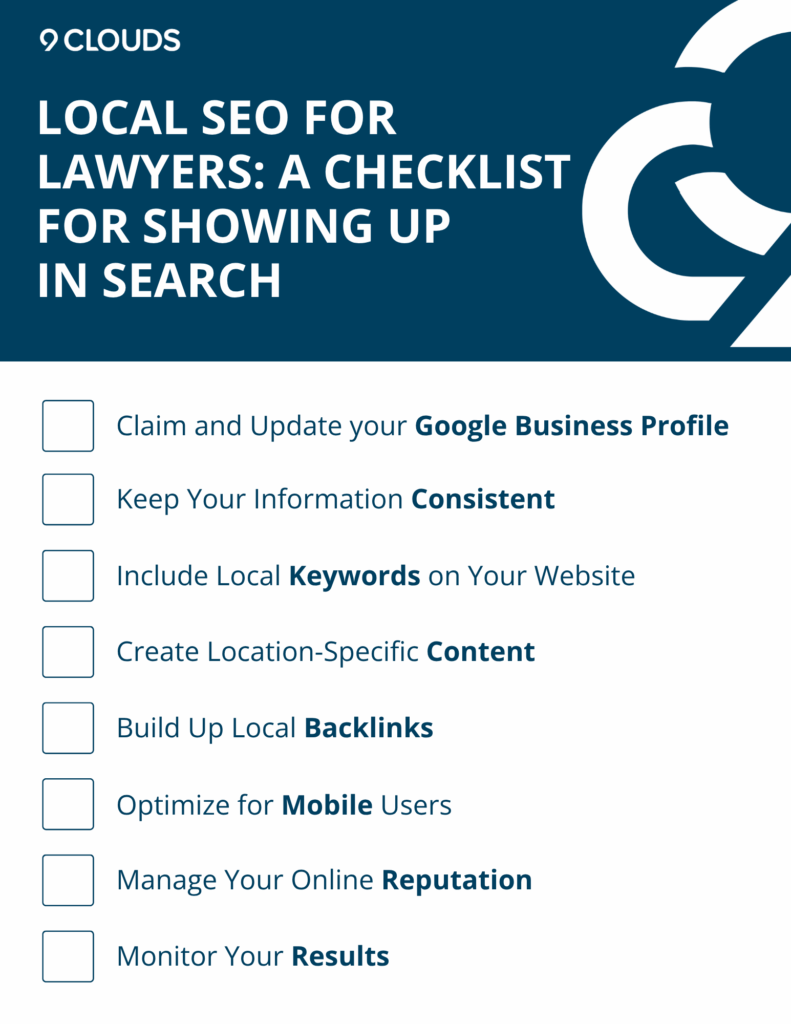
Here’s a checklist of eight things anyone on your team can do to improve your law firm’s online visibility and connect with more clients.
1. Claim and Update Your Google Business Profile
Your Google Business Profile is the foundation of local SEO.
When someone searches “personal injury lawyer near me” or “estate planning attorney in [city],” Google pulls information directly from these profiles.
Start by claiming your Google Business Profile if you haven’t already. Then update it with up-to-date information about your law firm, including your address, phone number, website, practice areas, and business hours.
Also, add high-quality photos of your office and team, and encourage happy clients to leave reviews (more on that later).
2. Keep Your Information Consistent
Search engines use information like your business name, address, and phone number (otherwise known as NAP in local SEO terms) to verify your firm’s legitimacy.
If this information varies across different websites, directories, and social media profiles, it confuses search engines and hurts your rankings.
Be sure to check your online listings and confirm your information is the same everywhere it appears, such as your website, Google Business Profile, legal directories, social media pages, and any other online listings, like Bing and Yelp.
Even small inconsistencies, like “Street” versus “St,” can impact your online visibility.
Tools like Birdeye can help keep all of your online listings consistent with the most accurate information on your law firm.
3. Include Local Keywords on Your Website
Effective marketing for any industry requires speaking the language your potential clients use.
For example, instead of including a broad term on your website like “criminal defense attorney,” focus on specific, local terms like “criminal defense attorney in [city]” or “[city] criminal defense attorney.”
Now, use these location-specific keywords naturally throughout your website.
- Include keywords on your homepage, service pages, and blog posts.
- Use keywords in headings, meta descriptions, body content, and URLs when applicable.
- Answer Engine Optimization (AEO) is becoming more and more prominent on search engine result pages (SERPs) because it provides direct responses to questions that people are searching for. Therefore, you should feature questions and answers with your keywords in an FAQ section on your website.
- Don’t awkwardly stuff keywords into every sentence. Write content that happens to include relevant keywords.
Search engines reward websites that provide genuine value to users.
4. Create Location-Specific Content
Content marketing (like blog posts, case studies, etc.) is an important part of local SEO for lawyers. By publishing helpful content on your website (using the keywords you established in step 3), you position your law firm as the local authority.
In addition to posting location-specific content on your website, consider extending this strategy to your social media profiles. Keep your Facebook/Instagram and LinkedIn profiles updated with accurate location information and practice area details. Also, share your blog posts and legal tips on these platforms.
5. Build Up Local Backlinks
Backlinks are links from other websites to yours. Credible backlinks tell search engines that your law firm is established and trustworthy.
- Get Listed: Make sure to get listed in reputable legal directories, local business directories, and your state bar association website.
- Start Local: Partner with city/regional organizations, sponsor community events, or contribute legal insights to local news outlets to earn valuable backlinks from other local websites.
6. Optimize for Mobile Users
While your website may look great on a desktop, it also needs to look great on mobile. Why? Over 60% of searches happen on mobile devices in the United States.
If your website doesn’t look good on mobile, you’re going to lose potential clients at their moment of urgency.
Test your website on various mobile devices and ask yourself:
- Does the website load quickly?
- Is the text readable and scannable?
- Are the buttons easy to tap?
- Is the contact information easy to find?
Take a look at Google Analytics and research how people are interacting on your website. Do mobile users leave your website after only a few seconds (or in other words, is your website’s bounce rate high)? This could be a sign that you need to update the layout of your website to help with the mobile experience.
7. Manage Your Online Reputation
Before choosing a lawyer, 90% of people read online reviews from previous clients. These reviews can make or break a potential client’s decision to contact your firm.
Actively encourage satisfied clients to leave reviews on Google and other legal directories. Make it easy by sending emails with direct links to your profiles (you can automate these emails, too!).
Once your profiles start getting reviews, quickly reply to those reviews. Either thank your clients for the positive feedback or address negative reviews with empathy and solutions.
Remember, you can’t please everyone, but how you handle criticism demonstrates your professionalism to future clients.
8. Monitor Your Results
Local SEO isn’t a one-time project. It requires ongoing time and attention.
Use free tools Google Analytics and Google Search Console to track which keywords are bringing traffic to your website, how visitors interact with your content, and where you’re ranking in search results. Pay attention to which practice area pages get the most visits and which blog posts resonate with readers (hint: check average session duration and bounce rate metrics).
This data can help you refine your local SEO strategy over time and focus on what actually brings clients to your doorstep.
Make Sure Your Law Firm Shows Up Online
Incorporating these local SEO strategies takes time and expertise, but the payoff is worth it.
If managing all of this feels overwhelming while you’re busy serving clients, our marketing agency can handle the technical details while you focus on practicing law.
Don’t let potential clients slip through the cracks because they can’t find you online. Start with this checklist, and watch your firm’s online visibility and client base grow!

Angie Vognild
Angie is always looking for creative ways to connect with an audience, whether it’s through a video, an infographic, a blog post, or a website. When she’s not being creative at work, Angie enjoys traveling and cruising the world. Learn more about Angie.